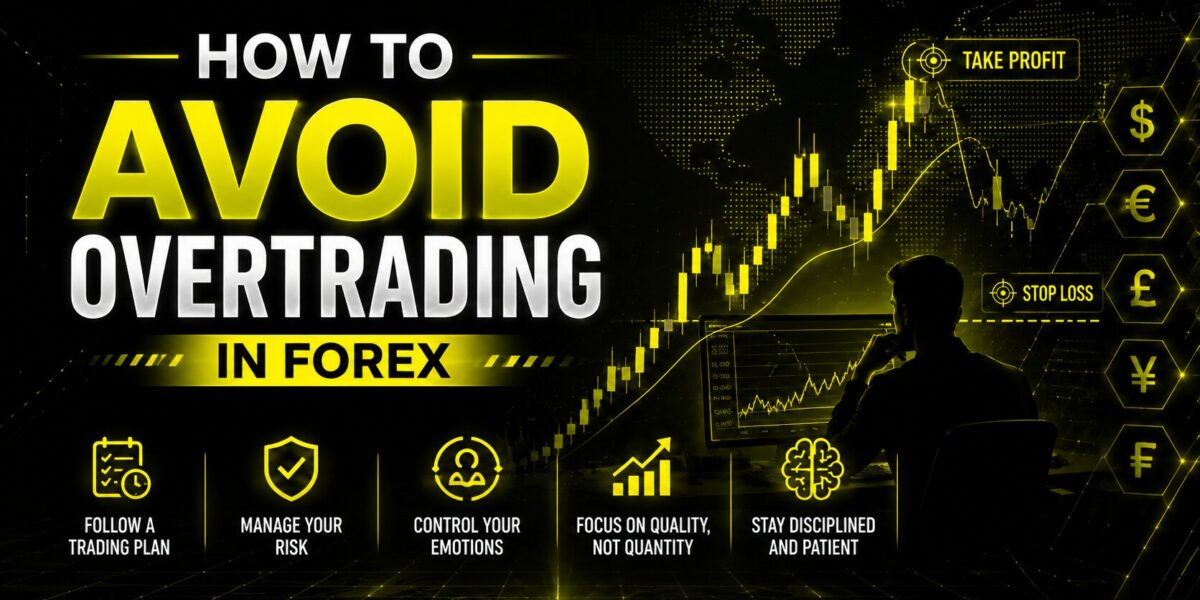
Overtrading in Forex is one of the most common mistakes that destroys trading accounts and prevents traders from achieving consistent profitability. Overtrading in Forex refers to excessive trading activity that exceeds what a trader’s trading plan and risk management framework can support.
When Overtrading in Forex becomes a habit, traders often make emotional decisions, ignore proper setups, and expose their capital to unnecessary risk. Overtrading often stems from poor trading psychology, emotional trading driven by fear and greed, and the desire to make quick profits. Whether you’re trading through an Instant Funding Prop Firm, using one of the Best Instant Funding Prop Firms, or working independently, understanding how to avoid overtrading in forex is critical for sustainable trading success.
This comprehensive guide explains what Overtrading in Forex is, why it is so destructive, the psychological factors that drive overtrading, and practical strategies to prevent it. We’ll explore how trading discipline, proper position sizing, daily risk limits, and trading schedules help prevent Overtrading in Forex.
We’ll also examine how stop loss and take profit orders enforce trading rules, how lot size in forex trading decisions impact overtrading risk, how economic calendars help forex traders avoid overtrading around major events, how day trading vs swing trading approaches differ in risk, and how scalping strategies can lead to Overtrading in Forex if not properly managed.
Understanding Overtrading and Its Dangers : Overtrading in Forex
Overtrading in Forex is a critical threat to sustainable trading and capital preservation. When traders ignore risk limits and enter too many positions, Overtrading in Forex can quickly lead to emotional decisions, unnecessary losses, and poor account management. Avoiding Overtrading in Forex requires discipline, patience, and a clear trading plan.
What Is Overtrading?
Overtrading occurs when a trader executes more trades than their trading plan and risk management framework support. Overtrading manifests as excessive trading frequency, larger position sizing than planned, trading outside established trading schedules, or trading in too many currency pairs simultaneously. Overtrading is often driven by emotional trading and the desire to recover losses quickly through revenge trading. The key characteristic of overtrading is that it violates the trader’s predetermined trading strategy and trading discipline .
Why Overtrading Destroys Trading Accounts
Overtrading is destructive because it compounds losses through multiple mechanisms. First, excessive trading increases transaction costs and market volatility exposure. Second, overtrading often involves larger position sizing than appropriate, amplifying losses when trades go wrong. Third, overtrading typically stems from emotional decisions rather than logical market analysis, leading to poor entry strategy and exit strategy execution. Fourth, overtrading prevents traders from following their stop-loss and take-profit rules consistently. The cumulative effect is rapid capital preservation failure and account depletion .
Overtrading and Trading Psychology
Overtrading is fundamentally a trading psychology problem. When traders experience losses, fear and greed emotions drive them to overtrade in an attempt to recover losses quickly. This revenge trading behavior leads to impulsive trading decisions that violate their trading plan and risk management rules. Understanding the trading psychology behind overtrading is the first step toward preventing it .
The Psychological Drivers of Overtrading
Overtrading in Forex is driven by specific psychological factors. Fear, greed, impatience, revenge trading, and the desire to recover losses quickly can all push traders into unnecessary positions.
Understanding these triggers is essential because Overtrading in Forex often begins with emotional decision-making rather than a valid trading setup. By recognizing these patterns early, traders can reduce Overtrading in Forex and maintain better discipline.
Fear and Greed in Overtrading
Fear and greed are the primary emotional drivers of overtrading. Fear of missing profitable opportunities drives traders to enter trades they shouldn’t take. Greed for quick profits drives traders to increase position sizing beyond appropriate levels. Fear of losses drives revenge trading after losses. Greed for larger profits drives traders to hold positions longer than their exit strategy specifies. Understanding and controlling fear and greed emotions is essential for preventing overtrading .
Revenge Trading and Impulsive Decisions
Revenge trading occurs when traders attempt to quickly recover losses through aggressive overtrading. After a losing trade, traders feel compelled to immediately enter another trade to “get even.” This impulsive trading behavior violates trading discipline and typically leads to larger losses. Revenge trading is a form of emotional trading that must be actively prevented through trading schedule discipline and predetermined daily risk limits .
Boredom and the Urge to Trade
Paradoxically, traders often overtrade when the forex market is quiet and boring. When there are no clear technical analysis signals or price action setups, undisciplined traders enter trades anyway just to “stay active.” This boredom-driven overtrading violates the trader’s trading strategy and entry strategy rules. Recognizing that “no trade is a good trade” when conditions aren’t favorable is essential for trading discipline .
Establishing a Trading Plan to Prevent Overtrading
A comprehensive trading plan is the foundation for preventing Overtrading in Forex. A well-defined strategy helps traders avoid impulsive decisions and maintain consistency during changing market conditions.
By following a structured plan, traders can reduce Overtrading in Forex through clear entry and exit rules, proper risk management, and disciplined execution. A consistent trading plan is one of the most effective tools for avoiding Overtrading in Forex and protecting long-term profitability.
Creating a Detailed Trading Strategy
A detailed trading strategy specifies exactly when trades should be entered and exited. The trading strategy should define specific technical indicators, price action patterns, or market analysis conditions that trigger trades. Without a clear trading strategy, traders are vulnerable to impulsive trading and overtrading. The trading strategy should also specify which currency pairs are tradeable and under what market volatility conditions .
Defining Entry and Exit Rules
Clear entry strategy and exit strategy rules prevent overtrading by removing discretion from trade decisions. The entry strategy should specify exactly what conditions must be met before entering a trade. The exit strategy should specify exactly when to exit through take-profit orders or stop-loss orders. These predetermined rules prevent impulsive trading and emotional trading .
Setting Daily Risk Limits
A daily risk limit specifies the maximum loss a trader will accept in a single day. Once the daily risk limit is reached, all trading stops for the day. This rule prevents revenge trading and overtrading in response to losses. A typical daily risk limit might be 2-3% of account equity. Once reached, the trader stops trading and reviews what went wrong .
Establishing a Trading Schedule
A trading schedule specifies when trading will occur. Many traders overtrade by trading during low-liquidity hours or when they’re not in the right mental state. A trading schedule might specify that trading only occurs during the London and New York sessions, or only during specific hours when the trader is most alert. Sticking to a trading schedule prevents overtrading during suboptimal conditions .
Position Sizing and Risk Management to Control Overtrading
Proper position sizing and risk management are critical for preventing overtrading.
Understanding Position Sizing
Position sizing determines how many currency pairs contracts to trade on each trade. Proper position sizing is based on account size, daily risk limit, and stop-loss distance. Many traders overtrade by using position sizing that’s too large for their account size. A simple rule is to risk no more than 1-2% of account equity on any single trade. This position sizing discipline prevents overtrading from destroying accounts .
Risk-to-Reward Ratio and Position Sizing
The risk-to-reward ratio should guide position sizing decisions. If a trade has a 1:3 risk-to-reward ratio, the potential profit is three times the potential loss. This favorable risk-to-reward ratio justifies taking the trade. However, if a trade has a 1:1 risk-to-reward ratio or worse, the trade should be skipped. Skipping unfavorable trades prevents overtrading .
Stop-Loss and Take-Profit Orders
Stop-loss and take-profit orders enforce risk management discipline by automatically exiting trades at predetermined levels. Using stop loss and take profit orders prevents traders from holding losing positions too long or exiting winning positions too early. Stop-loss and take-profit orders also prevent emotional trading decisions that lead to overtrading .
Lot Size and Overtrading Prevention
Lot size in forex trading decisions directly impact overtrading risk.
Appropriate Lot Size Selection
Traders who use lot size in forex trading that’s too large for their account are prone to overtrading because they feel pressure to quickly recover losses. Traders who use appropriate lot size in forex trading based on their account size and daily risk limit are less likely to overtrade. Starting with smaller lot size in forex trading and only increasing after consistent profitability is a prudent approach .
Lot Size and Emotional Control
Using smaller lot size in forex trading helps traders maintain emotional control and trading discipline. When the stakes are lower, traders are less likely to make impulsive trading decisions. As traders develop consistent profitability and trading discipline, they can gradually increase lot size in forex trading .
Trading Schedules and Economic Events
Trading schedules and awareness of economic calendars help forex traders prevent overtrading.
Avoiding Overtrading During High-Volatility Events
Economic calendars help forex traders identify when major market volatility will occur. Smart traders often reduce position sizing or avoid trading entirely during major economic events to prevent overtrading in chaotic market conditions. Economic calendars help forex traders plan their trading schedule around these high-volatility periods .
Trading Schedule Discipline
Establishing a trading schedule that specifies when trading will occur helps prevent overtrading. Some traders overtrade because they’re constantly watching the forex market and unable to resist entering trades. A trading schedule that limits trading to specific hours helps prevent this constant overtrading .
Different Trading Styles and Overtrading Risk
Different trading approaches have different overtrading risks.
Day Trading vs Swing Trading and Overtrading
Day trading vs swing trading approaches have different overtrading risks. Day traders are more prone to overtrading because they make multiple trades per day and feel pressure to stay active. Swing traders are less prone to overtrading because they hold positions for days or weeks. Understanding your trading style helps you implement appropriate overtrading prevention strategies .
Scalping in Forex and Overtrading
Scalping in forex is particularly prone to overtrading because the strategy involves numerous small trades throughout the day. Scalping in forex traders must be especially disciplined about daily risk limits and trading schedules to prevent overtrading from destroying their accounts. Many scalping in forex traders overtrade by taking trades that don’t meet their criteria .
Monitoring and Adjusting Your Trading
Regular monitoring prevents overtrading from developing.
Trading Journal and Performance Analysis
A trading journal records every trade and the reasoning behind it. Reviewing the trading journal regularly helps traders identify overtrading patterns and assess trading performance. If the trading journal shows that most trades violate the trading strategy, overtrading is occurring. The trading journal also helps identify whether overtrading is driven by specific emotional triggers or market conditions, and how it impacts overall trading performance .
Technical Analysis and Market Analysis
Disciplined technical analysis and market analysis help traders identify high-probability setups and avoid overtrading in low-probability situations. Traders who rely on rigorous technical analysis are less likely to overtrade because they have clear criteria for trade entry. Price action analysis and technical indicators provide objective trade signals that reduce emotional trading .
Sustainable Trading and Consistent Profitability
The goal of trading discipline and overtrading prevention is sustainable trading and consistent profitability. Traders who avoid overtrading and follow their trading plan consistently achieve better results than those who overtrade. Sustainable trading requires patience, trading discipline, and adherence to risk management rules .
Practical Implementation Strategies
Specific strategies help prevent overtrading in practice.
Using an Instant Funding Prop Firm Framework
Trading through an Instant Funding Prop Firm or one of the Best Instant Funding Prop Firms provides external discipline that helps prevent overtrading. These firms typically have strict daily risk limits, position sizing rules, and trading schedule requirements that force traders to follow trading discipline .
Pre-Trade Checklist
Creating a pre-trade checklist ensures that every trade meets the trading strategy criteria before entry. The checklist might include: Does the technical analysis signal a setup? Is the risk-to-reward ratio favorable? Have I already hit my daily risk limit? Am I trading within my trading schedule? Using a checklist prevents impulsive trading and overtrading .
Important Disclaimer: This guide is provided for educational purposes only and does not constitute financial or investment advice. Past performance is not indicative of future results. Trading involves substantial risk, and you should only trade with capital you can afford to lose. Always consult with a qualified financial advisor before making trading decisions.