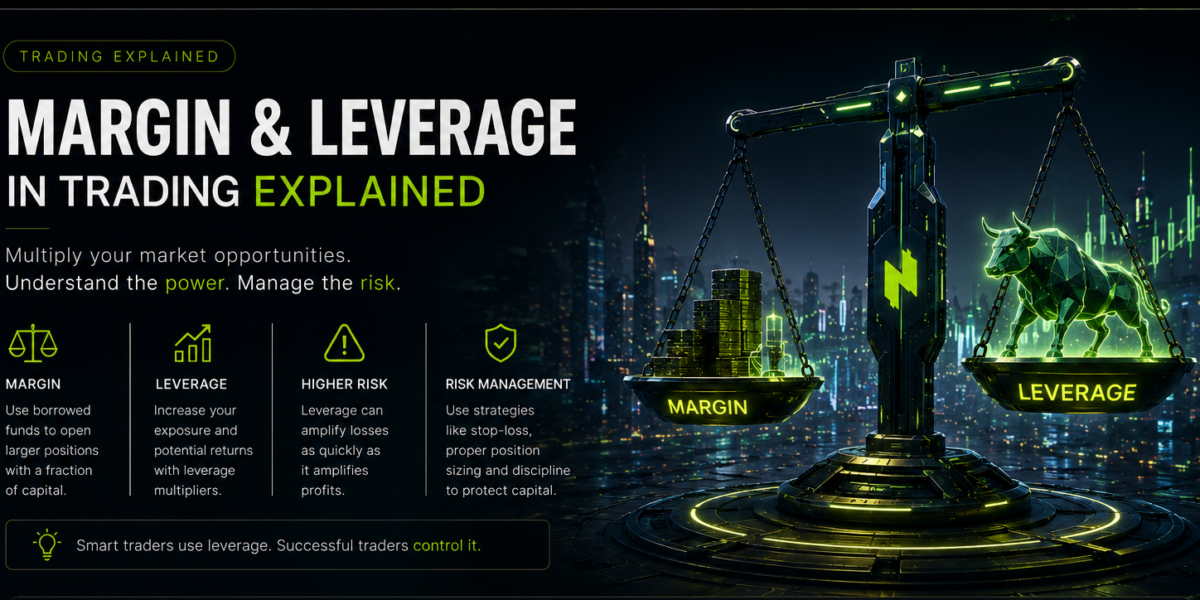
In the dynamic world of Financial markets, understanding the mechanics of Margin and Leverage is absolutely essential for anyone looking to maximize their Investment returns. Whether you are engaged in Forex trading, Futures contracts, Crypto trading, or traditional Securities trading, these concepts dictate your Purchasing power and overall Market exposure. While they offer the tantalizing prospect of Amplified profits, they simultaneously introduce the severe risk of Amplified losses. This comprehensive guide explores the intricacies of Margin trading and Leverage trading, providing essential Forex trading tips and insights to help you navigate a Leveraged trading environment safely, whether you are trading your own Account balance or utilizing an Instant Prop funding firm.
The Fundamentals of Margin Trading
To grasp how modern Online trading operates, one must first understand the concept of a Margin account. Unlike a standard cash account where you must pay the full price for an asset, a margin account allows you to trade with Borrowed funds. Understanding margin trading and leverage trading helps traders control larger positions with smaller capital, making Margin and Leverage powerful tools in financial markets. However, traders using margin trading and leverage trading must apply proper risk management, especially during volatile market conditions. Learning the Essential Skills to Become a Profitable Forex Trader can also help traders understand how leverage, discipline, and capital protection work together in real market conditions.
What is Margin?
In simple terms, margin is the good faith deposit or collateral required by your broker to open and maintain a leveraged position. It is not a fee or transaction cost; rather, it is a portion of your trading capital set aside to cover potential losses. A margin account allows traders to access greater buying power than a standard cash account, making margin trading useful for controlling larger positions with less upfront capital. Margin requirements are generally calculated according to the total position value, the asset being traded, and current market volatility. The remaining funds in your account are known as free margin and determine how much capital is available for additional positions. Applying practical Forex Trading Tips alongside a clear understanding of margin can help traders manage available capital more effectively and avoid taking unnecessary risk.
Initial Margin vs. Maintenance Margin
There are two critical thresholds traders need to understand. The initial margin is the amount of funds required to open a leveraged trade, while the maintenance margin represents the minimum equity that must remain in the account once the position is active. If adverse market movements cause account equity to fall below this required level, a margin call may occur, requiring the trader to deposit additional funds or reduce existing market exposure. Effective risk management can help traders maintain sufficient account equity and avoid unnecessary pressure during volatile market conditions. Understanding broader market movements, including GBP/USD & EUR Trends, can also help traders recognize how changing currency conditions may affect leveraged positions.
Understanding Financial Leverage
While margin represents the capital committed to a position, financial leverage is the mechanism that multiplies trading exposure. Leverage trading allows traders to control a position that is significantly larger than their actual capital. The leverage ratio shows the relationship between the trader’s available funds and the total position size. This can increase potential returns when markets move favorably, but it can also magnify losses when prices move in the opposite direction. Major economic releases can create sudden volatility, which is why understanding NFP Reports Explained can be valuable for traders using leverage during important market events.
How Leverage Multiplies Your Buying Power
For example, with a leverage ratio of 100:1, a trader could control a $100,000 position using only $1,000 of their own capital. This increased purchasing power is commonly used in Forex and other financial markets. Traders may use leverage when opening a long position if they expect an asset’s price to rise, while short selling can be used when they anticipate that the market price will decline. Depending on the financial instrument, leveraged trades may be executed through a broker or directly through an exchange.
The Double-Edged Sword of Leverage
The primary appeal of leverage is the potential for amplified profits. If the market moves in favor of your position, returns are calculated based on the full position size rather than only the amount deposited. However, leverage works equally strongly in the opposite direction. A 1% adverse price move on a highly leveraged trade can generate substantial losses and, at extreme leverage levels, potentially wipe out much of the trader’s initial capital. Understanding Bullish vs Bearish Forex Market Indicators can help traders better recognize changing market sentiment and make more informed decisions when managing leveraged positions.
The Mechanics of a Margin Call and Liquidation
Understanding the worst-case scenarios is a fundamental part of trading education. When leveraged positions move sharply against a trader, account equity can decline quickly. Without sufficient capital or protective controls, the situation may progress from a margin deficiency to forced liquidation, where positions are automatically closed to prevent further losses.
What Triggers a Margin Call?
A margin call is generally triggered when account equity falls below the minimum amount required to maintain open positions. This situation often occurs following significant market movements, unexpected news, or periods of elevated volatility. Traders may need to add capital or close part of their exposure to restore the account to the required level.
The Reality of Broker Liquidation
If the required funds are not added promptly, positions may be automatically closed at current market prices. This process protects the trading provider from losses associated with borrowed capital but can create substantial losses for the trader. Understanding liquidation risk is therefore essential when operating with leveraged positions.
Effective Risk Management Strategies
To survive and perform consistently in leveraged markets, disciplined risk controls are essential. Traders should focus on appropriate position sizing, stop-loss orders, available free margin, diversification, and realistic risk-reward ratios rather than simply trying to maximize exposure. Careful planning can help protect trading capital, reduce emotional decision-making, and create a more sustainable approach to online trading.Utilizing Stop-Loss Orders
One of the most critical Forex trading tips is the mandatory use of Stop-loss orders. A stop-loss automatically closes your trade at a predetermined price level, capping your potential losses. By defining your exit point before you even enter a trade, you remove emotion from your Trading decisions and protect your Trading capital from catastrophic Market movements.
Position Sizing and Risk-Reward Ratios
Proper Position sizing is the cornerstone of Margin safety. Professional traders rarely risk more than 1% to 2% of their total Account balance on a single trade. This conservative Capital allocation ensures that a string of losses won’t trigger a margin call. Furthermore, maintaining a favorable Risk-reward ratio—such as risking $1 to make $3—ensures that your winning trades outpace your losing ones, leading to consistent Trading performance over time.
Navigating Volatile Markets with Leverage
Volatile markets present both the greatest Trading opportunities and the highest risks. Your Trading strategy must adapt to the prevailing Trading environment. Understanding Margin and Leverage is crucial during periods of high Market volatility because rapid price swings can quickly amplify both profits and Trading losses. Traders who properly manage Margin and Leverage through disciplined Risk management, controlled Trading exposure, and strategic Position sizing are better equipped to protect their Trading capital while taking advantage of fast-moving market opportunities.
Adjusting Leverage Based on Volatility
In highly volatile conditions, it is prudent to reduce your Trade leverage ratio. High volatility increases the likelihood of sudden price spikes that can trigger stop-losses or margin calls prematurely. By lowering your leverage, you give your trades more room to breathe, reducing your overall Risk exposure while still participating in the market.
The Role of Trading Psychology
Finally, managing Margin and Leverage is as much about Trading psychology as it is about mathematics. The stress of managing a highly Leveraged position can lead to irrational Trading behavior, such as moving stop-losses or overtrading to recover losses. Maintaining strict Trading discipline, adhering to your Investment strategy, and practicing Portfolio diversification are essential for long-term success. Whether you are trading independently or seeking Capital growth through an Instant Prop funding firm, mastering these Trading fundamentals and Trading mechanics is the key to effective Risk mitigation and sustained profitability.
Advanced Considerations for Leveraged Investing
As traders progress in their journey, understanding the nuanced applications of Margin and Leverage becomes critical for sophisticated leveraged investing. Beyond the basic mechanics, advanced traders must consider how these tools interact with broader market forces, financing costs, and regulatory frameworks.
Regulatory Limits and Margin Requirements
It is important to recognize that margin requirements are not arbitrary; they are often dictated by regulatory bodies to promote market stability and protect retail traders from excessive exposure. For instance, in the United States, the Commodity Futures Trading Commission (CFTC) and the National Futures Association (NFA) set limits on the maximum leverage available to retail forex traders. Understanding these restrictions is an important part of trading education because they directly influence capital allocation, available buying power, and overall trading strategy.
The Impact of Overnight Financing Costs
When holding a leveraged position overnight, traders must also account for financing expenses, often referred to as rollover or swap rates. Because leveraged trading may involve borrowed funds, margin interest can become an important cost to consider when positions remain open for extended periods. Depending on the asset, market conditions, and interest rate differentials, these charges can gradually reduce overall trading profits.
A reliable trading platform should clearly display financing charges, available margin, open positions, and other account information so traders can monitor their exposure effectively. Factoring these costs into trade management is especially important for longer-term leveraged investing strategies.
Conclusion
Mastering Margin and Leverage is a fundamental prerequisite for anyone looking to participate responsibly in modern financial markets. While these tools provide greater purchasing power and the potential for capital growth, they also require disciplined risk management.
Using a stop-loss order can help limit losses when the market moves against a position, while proper position sizing helps ensure that no single trade exposes too much of the trader’s capital. By combining these techniques with careful account monitoring and disciplined trade management, traders can use leverage more responsibly while protecting their trading capital from unexpected market movements.
Whether these principles are applied through a personal broker account or a prop trading environment, disciplined management of margin and leverage remains essential for building a more sustainable long-term trading strategy.
Frequently Asked Questions
1. What is margin trading?
Margin trading allows traders to open larger positions using borrowed funds while depositing only a portion of the total trade value as collateral.
2. What is leverage trading?
Leverage trading lets traders control a larger market position with a smaller amount of capital, increasing both potential profits and potential losses.
3. What causes a margin call?
A margin call occurs when account equity falls below the required maintenance margin, which may require the trader to add funds or reduce open positions.
4. What is liquidation in margin trading?
Liquidation happens when a broker automatically closes positions because the account no longer meets the required margin levels.
5. How can traders manage risk when using margin and leverage?
Traders can manage risk through proper position sizing, stop-loss orders, sufficient free margin, and disciplined control of overall market exposure.