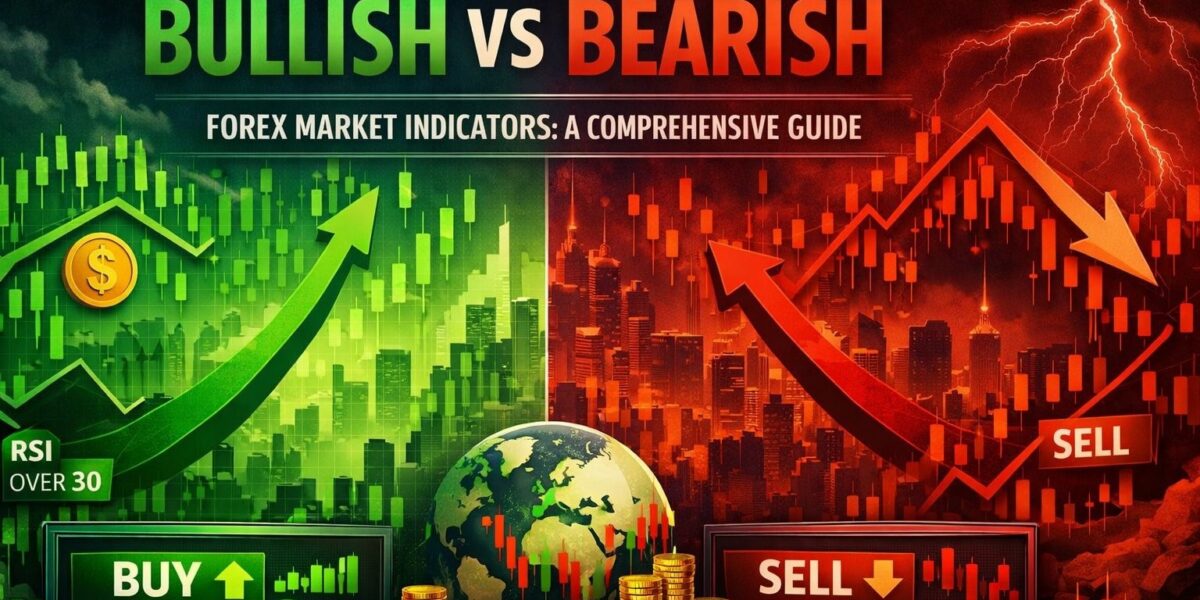
In the dynamic world of foreign exchange, understanding the fundamental forces that drive currency prices is essential for success. At the core of this understanding lies the eternal struggle between buyers and sellers, optimism and pessimism, growth and decline. This struggle is universally described using two of the most famous terms in finance: Bullish vs Bearish. Whether you are a seasoned professional or just starting out, your ability to accurately identify and interpret these market conditions will dictate your trading outcomes.
The forex market is unique because currencies are always traded in pairs. This means that every transaction involves simultaneously buying one currency while selling another. Consequently, a bullish market for one currency inherently means a bearish market for its counterpart. This dual nature provides traders with continuous opportunities to profit, regardless of the overall global economic climate. Mastering Bullish vs Bearish dynamics allows traders to stay adaptable in both rising and falling markets.
Beyond technical indicators, macroeconomic trends, central bank policies, and geopolitical events all influence price direction. Understanding how sentiment shifts between Bullish vs Bearish conditions can help traders make informed decisions, manage risk effectively, and capitalize on emerging opportunities with greater confidence.
Understanding Market Sentiment: Bullish vs Bearish
Before diving into specific technical and fundamental indicators, it is crucial to grasp the concept of market sentiment. Sentiment refers to the overall attitude or feeling that investors have toward a particular financial market or asset. It is the psychological undercurrent that drives the collective actions of millions of participants worldwide. In the context of Bullish vs Bearish markets, sentiment acts as the invisible force that often moves prices even before data confirms a trend.
When trader sentiment is positive, investors are optimistic about the future. They believe that the economy is growing, corporate profits will rise, and asset prices will increase. This optimism translates directly into buying pressure, as traders rush to acquire assets before prices go even higher. This phase clearly reflects Bullish vs Bearish dynamics, where optimism fuels upward momentum and strengthens market confidence.
Conversely, when sentiment turns negative, fear and pessimism take over. Investors worry about economic contraction, leading to intense selling pressure as they attempt to liquidate their holdings to prevent further losses. Understanding these emotional shifts within Bullish vs Bearish conditions helps traders anticipate market movements, avoid panic-driven decisions, and align their strategies with prevailing trends for better outcomes.
The Psychology of a Bullish Market
A bullish market, often discussed in the context of Bullish vs Bearish trends, is characterized by widespread optimism and high market confidence. In this environment, traders are willing to take on more risk because they believe the potential rewards outweigh the dangers. This collective confidence creates a self-fulfilling prophecy: as more people buy, prices rise, which in turn attracts even more buyers.
During a bullish phase, bad news is often quickly dismissed or interpreted as a temporary setback, while good news is celebrated and amplifies the upward trajectory. Traders actively look for opportunities to enter long positions, expecting the asset’s value to continue appreciating over time. When comparing Bullish vs Bearish market conditions, this phase clearly reflects strong buyer dominance and sustained upward momentum.
The Psychology of a Bearish Market
In stark contrast, a bearish market, often explained through the lens of Bullish vs Bearish dynamics, is dominated by fear, uncertainty, and a general lack of market confidence. Traders become highly risk-averse, preferring to protect their capital rather than seek aggressive growth. This shift in psychology leads to sustained selling pressure, driving prices lower.
In a bearish environment, even positive economic news may be ignored or viewed with skepticism, while negative news confirms the market’s worst fears, accelerating the decline. Traders in this scenario look for opportunities to take short positions, aiming to profit from the falling prices. When analyzing Bullish vs Bearish conditions, this phase highlights strong seller control and a continuing downward trend.
Analyzing Price Movement and Trends
The most direct way to determine whether a market is bullish or bearish is by analyzing its price movement over a specific period. While short-term fluctuations happen constantly, successful traders focus on identifying the broader market trend. A trend is the general direction in which a market is moving, and it provides the most reliable indication of who is currently in control: the bulls or the bears.
Identifying an Upward Trend
An upward trend is the hallmark of a bullish market. Technically, it is defined by a series of higher highs and higher lows on a price chart. This pattern indicates that despite occasional pullbacks, the overall trajectory is moving upward. Each time the price dips, buyers step in at a higher level than before, demonstrating strong and sustained demand. In the broader context of Bullish vs Bearish markets, this structure clearly reflects buyer dominance and growing confidence.
When analyzing an upward trend, traders look for momentum to remain strong. As long as the sequence of higher highs and higher lows remains intact, the bullish trend is considered valid, and traders will generally favor long positions. This is where understanding Bullish vs Bearish behavior becomes crucial, as traders align their strategies with prevailing market direction to maximize potential gains.
Additionally, volume often supports a strong uptrend, with increased buying activity confirming the move. Breakouts above resistance levels further strengthen bullish signals. Recognizing these patterns within Bullish vs Bearish conditions allows traders to enter trades with better timing, manage risk effectively, and stay aligned with the overall market momentum.
Identifying a Downward Trend
Conversely, a downward trend, often explained through Bullish vs Bearish market behavior, signifies a bearish market. It is characterized by a series of lower highs and lower lows. In this scenario, every time the price attempts to rally, sellers overwhelm the buyers at a lower price point than the previous peak. This indicates a persistent lack of demand and strong selling motivation, reinforcing the dominance of sellers.
A downward trend confirms that the bears are in control. Traders will typically look for opportunities to sell short during brief rallies, expecting the overall downward trajectory to continue until a clear reversal pattern emerges. When analyzing Bullish vs Bearish conditions, this pattern highlights sustained negative sentiment and market weakness. Understanding Bullish vs Bearish dynamics in such trends helps traders align their strategies with the prevailing market direction and manage risk more effectively.
Fundamental Indicators: Economic Data
While technical analysis focuses on price charts, fundamental analysis looks at the underlying economic forces that drive currency strength and currency weakness. In the forex market, currencies are essentially a reflection of the health of their respective national economies. Therefore, monitoring key economic data is essential for determining whether a currency is likely to experience a bullish or bearish phase.
To better understand Bullish vs Bearish market movements, traders closely follow indicators such as interest rates, inflation data, GDP growth, employment reports, and central bank policies. These factors provide deeper insights into a country’s economic stability and future outlook. For example, rising interest rates often attract foreign investment, strengthening a currency, while weak economic data can lead to depreciation.
In the broader context of Bullish vs Bearish trends, strong fundamentals can support long-term upward momentum, while weak fundamentals reinforce downward pressure. By combining both technical and fundamental analysis, traders gain a more complete view of Bullish vs Bearish conditions, allowing them to make more informed and strategic trading decisions.
The Role of Interest Rates
Perhaps the most significant driver of forex markets is interest rates. Central banks use interest rates to control economic growth and inflation. When a central bank raises interest rates, it offers a higher rate of return on investments denominated in that currency. This attracts foreign capital, increasing demand and leading to currency strength (a bullish indicator).
Conversely, when a central bank lowers interest rates, the currency becomes less attractive to foreign investors seeking yield. Capital flows out of the country in search of better returns elsewhere, resulting in currency weakness (a bearish indicator).
The Impact of Inflation
Inflation is another critical economic indicator. It measures the rate at which the general level of prices for goods and services is rising. Moderate inflation is normal in a growing economy, but high inflation erodes the purchasing power of a currency. When a country experiences high inflation relative to its trading partners, its goods become more expensive internationally, reducing exports and weakening the currency (a bearish signal).
However, the relationship between inflation and currency value is complex. If inflation rises, a central bank may be forced to increase interest rates to combat it. As discussed earlier, higher interest rates can attract capital and strengthen the currency. Therefore, traders must analyze inflation data in conjunction with anticipated central bank policy responses.
Geopolitics and Market Cycles
Beyond pure economic data, broader global events and natural market rhythms play a massive role in determining bullish and bearish conditions. The forex market is highly sensitive to global stability, and traders must constantly monitor the geopolitical landscape.
Political Stability and Currency Value
Political stability is a major factor in market confidence. Countries with stable governments, clear rule of law, and predictable economic policies tend to attract foreign investment, leading to a stronger, bullish currency. Investors feel secure parking their capital in these jurisdictions.
On the other hand, political turmoil, elections, trade wars, or geopolitical conflicts create uncertainty. Capital naturally flees from uncertainty toward safe-haven assets. A country experiencing political instability will almost certainly see its currency face intense bearish pressure as investors withdraw their funds.
Navigating Market Cycles
Financial markets do not move in straight lines forever; they operate in market cycles. A period of prolonged bullish expansion will eventually lead to overvaluation, prompting a correction or a transition into a bearish phase. Similarly, a deep bearish market will eventually reach a point where assets are undervalued, attracting buyers and sparking a new bullish cycle.
Understanding these cycles is crucial for identifying a potential trend reversal. A reversal occurs when the dominant market force loses its market momentum, and the opposing force takes control. Traders use various technical indicators, such as moving averages and momentum oscillators, to spot the early warning signs of a reversal, allowing them to adjust their strategies before the broader market catches on.
Risk Management in Any Market
Whether you are trading in a roaring bull market or a steep bear market, the principles of capital protection remain exactly the same. Many novice traders make the mistake of abandoning their discipline when they feel highly confident in a strong trend. This is a recipe for disaster.
Regardless of the market conditions, professional traders strictly adhere to the 1% Risk Rule in Trading. By never risking more than 1% of their total account capital on a single trade, they ensure that a sudden trend reversal or unexpected news event does not wipe out their portfolio. This disciplined approach allows them to survive the inevitable losing trades and stay in the game long enough to capitalize on major market movements.For traders who have mastered these risk management principles but lack the personal capital to generate significant returns, partnering with an Instant Prop funding firm can be a game-changer. These firms provide skilled traders with access to substantial capital, allowing them to trade both bullish and bearish markets with significant volume, provided they strictly follow the firm’s risk management guidelines. By combining a deep understanding of market indicators with ironclad risk management, traders can navigate the complexities of the forex market and achieve long-term success.